




Original Hybrid System
Integrates Environmental Performance and FUN at a High Level
Honda began taking initiatives, ahead of the times, to adopt electrification technologies to its automobiles in various ways, in order to reduce CO2 emissions, which Honda considers a critical challenge for a manufacturer of mobility products. Among these electrification technologies, hybrid-electric systems are the most familiar one, and Honda is further expanding its lineup of hybrid-electric models.
A hybrid-electric vehicle is equipped with electric motors in addition to an engine and achieves excellent fuel economy by efficiently using those two power sources.
The e:HEV hybrid-electric system was created by combining all of the engine and electrification technologies Honda has amassed to date and adopting a host of new technologies to achieve overwhelmingly high fuel economy and a new level of fun of driving.
The electric motor drives the vehicle for the entire speed range, and the internal combustion engine (ICE) is engaged only while cruising at high speed. This system achieves excellent fuel economy while offering the exhilarating and sophisticated fun of driving unique only to e:HEV, unattainable with an ICE-only system.
Motor-First Driving
The electric motor drives the vehicle across the entire speed range, delivering instant torque and whisper-quiet refinement in every drive.
Outstanding Efficiency
By combining an efficient Atkinson cycle engine with two electric motors, e:HEV achieves fuel economy unattainable with a conventional engine alone.
Image of e:HEV System

â‘ Traction motor, Generator motor
The Honda two-motor hybrid system consists of a traction motor and a generator motor, which efficiently convert engine output into electricity, supply power to drive the tires and charge the battery, while also regenerating electricity during deceleration. The traction motor uses a magnet which is free of heavy rare earth elements.
â‘¡ Atkinson cycle DOHC engine
This engine realizes a high-output Atkinson cycle with excellent thermal efficiency, converting every drop of fuel into maximum energy with minimal waste.
â‘¢ Lock-up clutch
During high-speed cruising, the system shifts into "engine drive mode," where the engine output shaft is directly connected to the wheels. With gear ratios suitable for high-speed driving, equivalent to the top gear in a manual transmission, the simple power transmission path maximizes the highly efficient operation of the Atkinson cycle.
â‘£ Power Control Unit (PCU)
The PCU consists of a power drive unit (PDU) that converts battery current to AC and a voltage control unit (VCU) that boosts the voltage to a maximum of 650V, based on the requirement by the traction motor. As a result of downsizing and an increase in efficient operation, the PCU fits inside the engine compartment.
⑤ Battery Pack
Power unit that combines lithium-ion batteries with an ECU for control, which efficiently stores and outputs electricity, contributing greatly to fuel efficiency and driving performance.
The visuals in this content are for informational purposes only and do not represent any specific product or model.
How e:HEV Works
e:HEV Maintains its High Efficiency in All Driving Situations by Intelligently Switching Between Three Modes
EV drive mode
During startup acceleration and city driving, the vehicle runs on the motor alone, powered by electricity from the battery. Since the engine is off, the vehicle runs like a BEV, without using gasoline. The driver's operation of the accelerator pedal and motor power output are precisely controlled, ensuring a smooth and highly responsive driving experience.
Hybrid drive mode
The vehicle runs on the motor alone using electricity generated by the engine. Electricity from the battery is also used to realize powerful acceleration. A linear acceleration feel is achieved by optimizing the balance between acceleration G in response to accelerator pedal operation and engine speed increase.
Engine drive mode
During high-speed cruising, which requires less driving force, engine drive mode is more efficient than running the motor at high speed. Engine output is directly connected to the driveshaft to reduce power loss.
EV drive mode (Regenerative braking mode)
When decelerating or driving downhill, the tire rotation drives the traction motor to generate electricity, converting kinetic energy into electricity which is stored in the battery.
Why an electric motor at low speed, an engine at high speed?
An ICE can generate high output at high-rpm range, but has difficulty in generating large torque at low-speed range such as when the car starts moving from a stop. Due to this characteristic, the fuel economy of ICE vehicles is not very high in urban areas where frequent stops and starts are required. On the other hand, an electric motor can generate maximum torque from the low-speed range such as when the vehicle starts moving. By using an electric motor at low speed and an ICE at high speed, the hybrid-electric vehicle achieves high efficiency and thus high fuel economy.
e:HEV Learning Videos
Watch and learn how Honda's hybrid technology works
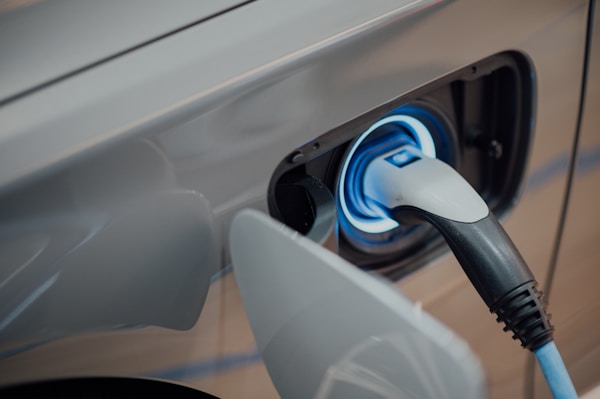
What is e:HEV?
A quick introduction to Honda's original hybrid-electric system and the philosophy behind it.
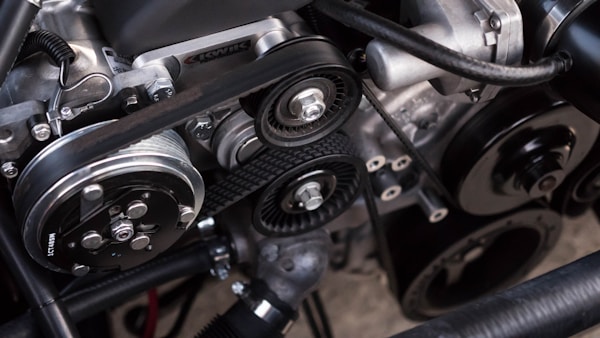
Two-Motor Hybrid System Explained
How the traction motor and generator motor work together to deliver efficiency and fun.

Three Intelligent Drive Modes
See how e:HEV seamlessly switches between EV, Hybrid, and Engine drive modes.
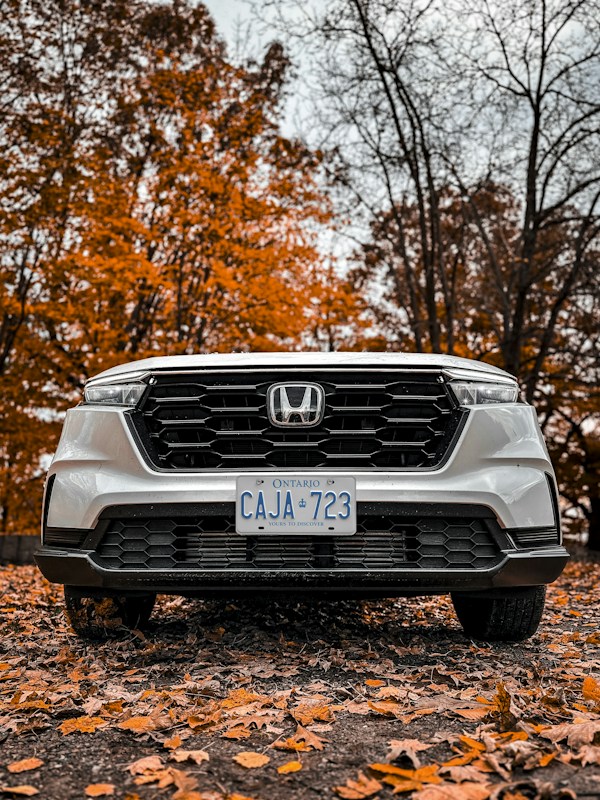
e:HEV on the Road
Experience the HR-V e:HEV in real-world driving conditions around Pakistan.
The Difference Between e:HEV and Other Types of Hybrid-electric Systems
An intelligent hybrid unique to Honda — combining the best of series and parallel systems
Difference with a series-parallel hybrid system
While the series-parallel hybrid system adjusts the ratio of engine and motor drive according to driving conditions, the e:HEV uses efficient motor drive for most daily driving situations. There are two modes of motor drive: EV drive mode and Hybrid drive mode. The e:HEV realizes high-quality motor driving and excellent efficiency for both modes by featuring a simple structure without a complex power distribution mechanism.
Difference with a series hybrid-electric system
With a series hybrid system, the engine generates electricity which is used by the electric motor which drives the vehicle for the entire speed range. Even during high-speed cruising, the motor, which is less effective than the engine, has to maintain high rpm, therefore, the engine must increase the amount of electricity generation. In contrast, during high-speed cruising, the e:HEV simply engages the engine directly to drive the vehicle. The vehicle drives with high quietness and fuel economy in the speed range where the engine is most efficient.
Single-motor vs Two-motor hybrid
A single-motor hybrid system uses one electric motor to assist the engine, primarily for regenerative braking and power boost. In contrast, a two-motor hybrid system, like Honda e:HEV, has two electric motors:
- Drive Motor: Powers the wheels for better acceleration and efficiency.
- Generator Motor: Converts engine power into electricity to charge the battery and assist the drive motor.
Honda's two-motor e:HEV system provides smoother transitions, improved fuel efficiency, and better EV mode driving compared to a single-motor hybrid.
e:HEV vs Plug-in Hybrid (PHEV)
Customer Voice
Hear from real Honda e:HEV owners
The fuel economy is unbelievable. I'm getting nearly double the mileage I used to get with my old sedan, and the car is so quiet in city driving — it feels like an EV.
I was worried about hybrid reliability, but Honda's system is incredibly smooth. The transition between modes is seamless — you barely notice it switching from motor to engine.
Instant torque from the motor makes city driving so much more enjoyable. Overtaking is effortless, and on the motorway the engine takes over perfectly. Best of both worlds.
Subscribe
Stay updated with the latest Honda e:HEV news and offers
Join the e:HEV Community
Get the latest hybrid technology updates, exclusive offers, and event invitations from Honda Township.
FAQs
Frequently asked questions about Honda e:HEV
- Drive Motor: Powers the wheels for better acceleration and efficiency.
- Generator Motor: Converts engine power into electricity to charge the battery and assist the drive motor.
- EV Mode: Runs purely on electric power for short distances.
- Hybrid Mode: Uses both the petrol engine and electric motor for efficiency and powerful acceleration.
- Engine Mode: During high-speed cruising, engine drive mode is more efficient than motor. Engine output is directly connected to drive shaft to reduce power loss.
- No gear shifts or lag like in traditional automatics.
- Instant acceleration from the electric motor.
- Smooth and quiet operation, especially in city driving.
- Honda e:HEV is self-charging and does not need to be plugged in.
- PHEVs require external charging and can drive longer on electric power.